Independent editorial comparison by JPB Software Solutions LLC, based on manufacturers' published specifications. We are not paid by these manufacturers. As an Amazon Associate I earn from qualifying purchases: some "Check price on Amazon" links on this page are affiliate links, and commissions never influence our rankings.
Wi-Fi 7 Mesh Systems · Buying guide · Updated October 2026
Best Wi-Fi 7 Mesh Systems: MSI Roamii BE Pro vs Deco BE23 vs Orbi 870 vs Eero Pro 7
Wi-Fi 7 mesh kits now span a wide range: affordable dual-band systems built for one gigabit-class plan, and tri-band flagships built for multi-gig fiber and dozens of devices. This guide compares four current Wi-Fi 7 systems on published manufacturer specifications only - bands, ports, backhaul, coverage, and the subscriptions some brands use to unlock their best security and parental-control features.
On published specifications, the Orbi 870 has the highest combined theoretical Wi-Fi speed, the largest claimed coverage area, and the only 10 Gbps WAN port in this group - the clearest fit for a large home on a fast multi-gig internet plan. Buyers who don't need that ceiling, want no subscription, or care more about smart-home integration should weigh the alternatives below.
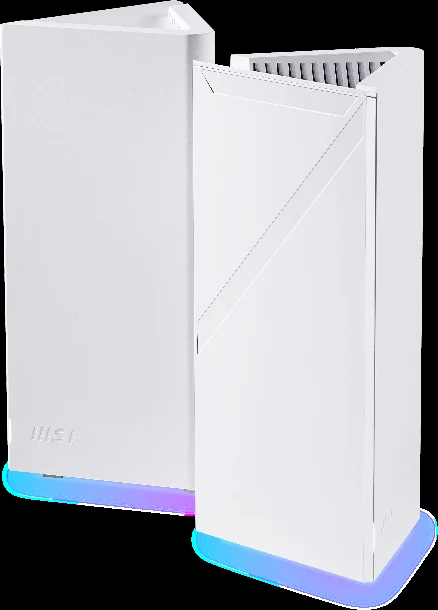
Full tri-band spec sheet and no subscription requirement, but no 10G port, no confirmed Matter/Thread support, and a newer, less established mesh app ecosystem.
Deco BE23
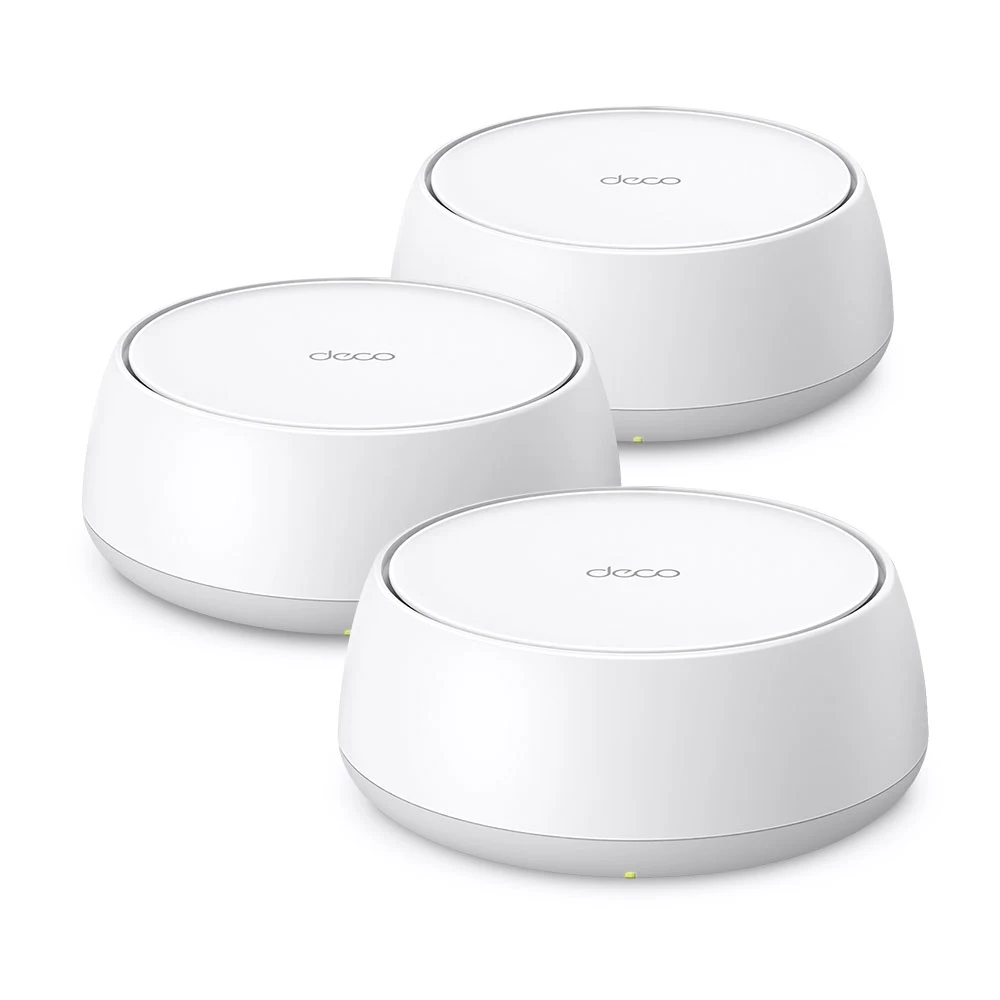
The lowest price and widest pack-size choice, but no 6GHz band and HomeShield's best features sit behind a subscription.
Orbi 870
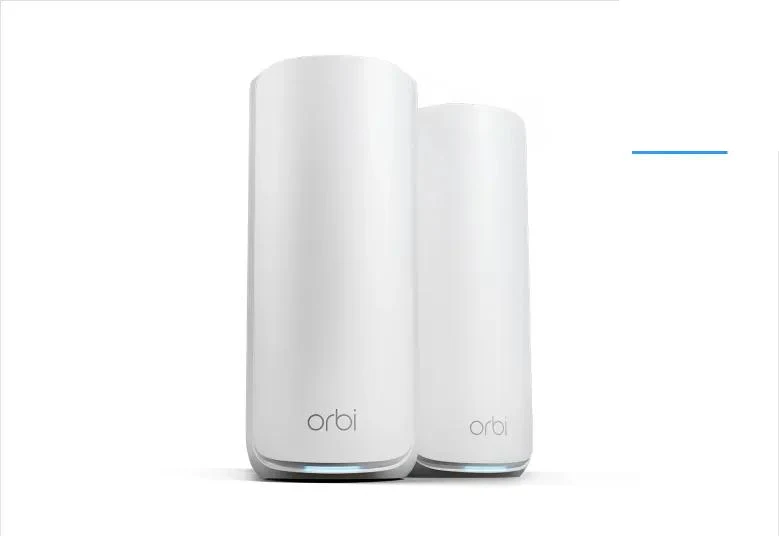
The highest theoretical speed, biggest coverage claims, and only 10G WAN port here, but full security protection needs a recurring Armor subscription after the trial.
Eero Pro 7
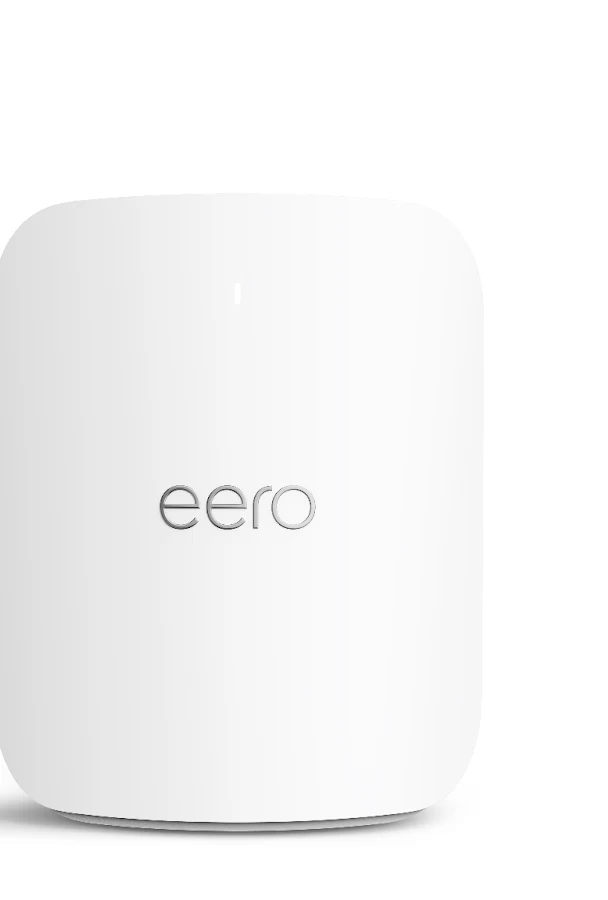
The strongest smart-home integration and simplest setup, but security extras need an Eero Plus subscription and per-node coverage is modest next to Orbi.
Side by side
Compare the specs
All figures below come from each manufacturer's published spec sheet. Theoretical Wi-Fi speeds describe the radio link only, not your internet speed - see the guide further down this page.
Wi-Fi 7 Mesh Systems specifications with category winners
Spec
MSI Roamii BE Pro Mesh System (MRBE110)
TP-Link Deco BE23 (BE3600)
Netgear Orbi 870 Series (RBE873, BE21000)
Eero Pro 7
Wi-Fi standard
Wi-Fi 7 (802.11be)
Wi-Fi 7 (802.11be)
Wi-Fi 7 (802.11be)
Wi-Fi 7 (802.11a/b/n/ac/ax/be)
Bands
Tri-band (2.4GHz / 5GHz / 6GHz)
Dual-band (2.4GHz / 5GHz) - no 6GHz radio
WinnerTri-band (2.4GHz / 5GHz / 6GHz), 10 streams
Tri-band 2x2/2x2/2x2 (2.4GHz / 5GHz / 6GHz)
Theoretical combined speed
Up to 11 Gbps combined (5764 Mbps 6GHz + 4323 Mbps 5GHz + 688 Mbps 2.4GHz)
Up to 3.6 Gbps combined (688 Mbps 2.4GHz + 2882 Mbps 5GHz)
The Orbi 870 posts the highest theoretical combined Wi-Fi speed and the largest per-pack coverage figures of this group, and it is the only one with a 10 Gbps WAN port - useful if your ISP plan exceeds 2.5Gbps. Each satellite also carries four 2.5G LAN ports for wired devices. Netgear Armor, its security layer, ships with a 30-day trial and then requires an ongoing subscription to keep full protection active.
Key advantages
Highest published combined Wi-Fi speed (up to 21 Gbps) of this group
Only system here with a 10 Gbps WAN port
Largest claimed coverage area (up to 9,000 sq. ft. in 3-pack)
What you give up
Full Netgear Armor protection requires a paid subscription after 30 days
No confirmed Matter/Thread smart-home hub support
Satellites and router have different ports - check which unit you're adding to
Best for: Large homes on a multi-gig fiber plan who want the highest theoretical ceiling and a 10G WAN port
On paper, the Roamii BE Pro packs in full tri-band Wi-Fi 7 with a 6GHz band, four 2.5G Ethernet ports per node, and MSI's FortiSecu security suite (powered by Trend Micro) built in at no extra cost. It undercuts the Orbi and Eero systems on price while matching their core Wi-Fi 7 feature set.
Key advantages
Tri-band with a dedicated 6GHz band
4x 2.5G Ethernet ports per node
FortiSecu security and parental controls included free
Flexible wired or wireless MLO backhaul
What you give up
No 10 Gbps port for top-tier fiber plans
No confirmed Matter or Thread smart-home hub support
Newer brand in home mesh Wi-Fi with a smaller support track record
Best for: Buyers who want tri-band Wi-Fi 7 and real security features without a subscription
The Deco BE23 is TP-Link's entry point into Wi-Fi 7, and it is dual-band rather than tri-band - there is no 6GHz radio. On paper that keeps combined throughput much lower than the other three systems here, but it also keeps the price down while still adding Wi-Fi 7 features like MLO and a 2.5Gbps port. Its HomeShield security suite is the most tiered of the four: a free basic level plus three paid plans, so buyers who want every feature long-term should budget for a subscription.
Key advantages
Lowest-cost way into a Wi-Fi 7 mesh system
Available in 1, 2, or 3-pack to match home size
2.5Gbps wired/wireless flexible backhaul
What you give up
Dual-band only - no 6GHz, so far less headroom in crowded networks
Lowest combined theoretical speed in this group
Full HomeShield security and parental control features require a paid subscription after the free trial
Best for: Budget-minded buyers on a standard gigabit plan who don't need a 6GHz band
The Eero Pro 7 is the only system here with a built-in Thread border router and Zigbee hub, plus Matter controller support - useful if you run smart locks, sensors, or lights alongside your Wi-Fi. Each unit has two 5GbE ports, and Eero's app is consistently cited as one of the simplest mesh setup experiences available. Wired backhaul tops out at 5Gbps rather than Orbi's 10G WAN port, and the deeper security and ad-blocking features sit behind the paid Eero Plus subscription.
Key advantages
Built-in Thread border router, Zigbee hub, and Matter controller support
Two 5GbE ports per unit for multi-gig wired devices
Widely regarded as the easiest mesh app to set up and manage
What you give up
Ad blocking, advanced security, and content filters require an Eero Plus subscription
Lower per-unit coverage claim than Orbi's satellites
No 10G port for internet plans above roughly 5Gbps
Best for: Households with Alexa, Thread, or Matter smart-home devices who prioritize easy setup
Theoretical Wi-Fi speed is not your internet speed
Every spec sheet in this comparison lists a 'combined' or 'theoretical' Wi-Fi speed, such as the Orbi 870's 'up to 21 Gbps.' These numbers describe the maximum physical radio link rate across every band added together, under lab conditions, with no interference and a device capable of using the full channel width. They are not a measurement of how fast your internet connection will feel.
Your actual internet speed is capped by your ISP plan. If you pay for a 500 Mbps connection, no mesh system - Wi-Fi 6 or Wi-Fi 7 - will make downloads from the internet faster than 500 Mbps, no matter what the box says. A tri-band system with a 21 Gbps rating still can't exceed the speed your modem receives from your provider.
Where a high theoretical Wi-Fi rating does matter is local, device-to-device, and multi-user traffic: transferring files between a laptop and a NAS drive over Wi-Fi, streaming 4K/8K video to several TVs while others are gaming and video-calling, or keeping dozens of smart-home devices responsive at once. A 6GHz band and wider channels help the most in homes with many devices and nearby competing Wi-Fi networks, not in making a single internet connection faster than your ISP plan allows.
Match the WAN port to your plan
If your internet plan is under 1 Gbps, a 2.5G or 10G WAN port makes no practical difference to download speed - it only matters once your plan or local network traffic exceeds 1 Gbps.
6GHz helps with congestion, not raw internet speed
The 6GHz band mainly reduces interference from neighboring Wi-Fi networks and other 2.4/5GHz devices, improving consistency more than it changes your ISP-capped download speed.
Practical context
Dual-band vs tri-band Wi-Fi 7
The Deco BE23 in this comparison is dual-band - it only broadcasts on 2.4GHz and 5GHz, skipping 6GHz entirely. The other three systems are tri-band, adding a dedicated 6GHz radio. On a tri-band mesh system, that extra 6GHz band is often reserved purely for backhaul traffic between nodes, which frees up the 5GHz band for your devices and can keep speeds more consistent as you add nodes.
A dual-band system is not necessarily a bad choice. For a single gigabit-class internet plan in a modest home with a normal number of devices, the extra 6GHz band on a tri-band system provides headroom rather than a speed increase you'd notice. It becomes more valuable in larger homes, in multi-node mesh setups, and in apartment buildings with lots of nearby Wi-Fi congestion.
Practical context
Wired vs wireless backhaul, and why it matters
Backhaul is the connection between your mesh nodes themselves, separate from the connection to your devices. All four systems here support wireless backhaul out of the box, and all four also support wired backhaul over Ethernet if you can run a cable between nodes.
Wired backhaul is almost always faster and more reliable because it doesn't share airtime with the Wi-Fi your devices are using. If a node is far from the router or behind multiple walls, a wired Ethernet backhaul link will typically outperform even a tri-band wireless mesh connection. The Orbi 870 and MSI Roamii BE Pro both support dedicated wired backhaul up to 2.5Gbps; the Eero Pro 7 supports wired backhaul up to 5Gbps per its port speed.
Before you buy
Buying guide
Match your mesh system to your internet plan, not the Wi-Fi rating
Check your actual ISP speed first. A system with a 10G WAN port is wasted on a 300 Mbps plan; conversely, a 2.5Gbps-only WAN port will bottleneck a 5Gbps+ fiber plan.
Count your devices and home size realistically
Published coverage and device-count figures are maximums under ideal conditions. Walls, floors, and building materials reduce real coverage, so consider sizing up a pack if your home has multiple floors or dense construction.
Factor in subscription costs for security features
TP-Link HomeShield, Netgear Armor, and Eero Plus all gate their deepest security, parental control, or ad-blocking features behind paid subscriptions after an initial free trial. MSI's FortiSecu is the only suite here with no confirmed paid tier.
Check smart-home protocol support if relevant
Only the Eero Pro 7 in this group confirms a built-in Thread border router, Zigbee hub, and Matter controller. If you use Thread or Zigbee devices, this materially changes what extra hardware you need.
Decide if you need multi-gig Ethernet
If you have a NAS, desktop PC, or game console that benefits from wired speeds above 1 Gbps, check each node's Ethernet port speed - these range from 2.5 Gbps to 10 Gbps WAN in this comparison.
Dual-band can be enough for simple homes
If you have one gigabit-class plan, a typical number of devices, and a small-to-mid-size home, a dual-band Wi-Fi 7 system like the Deco BE23 can be a reasonable way to save money over a tri-band flagship.
FAQ
Common questions
Will a Wi-Fi 7 mesh system make my internet faster than my ISP plan?
No. Theoretical Wi-Fi speeds describe the radio link between your devices and the mesh nodes, not your connection to the internet. Your download/upload speed from the internet is capped by your ISP plan regardless of which mesh system you use.
Do I need a 6GHz band if I only have a gigabit internet plan?
Not strictly. On a single gigabit plan, a dual-band system like the Deco BE23 can deliver that speed to your devices. A 6GHz band mainly helps with device congestion, backhaul capacity, and multi-node mesh consistency rather than raising your internet speed above what your ISP provides.
Which of these systems needs a subscription for full features?
TP-Link's Deco BE23 (HomeShield), Netgear's Orbi 870 (Armor), and Eero's Pro 7 (Eero Plus) all offer a free trial before requiring payment for their most advanced security, parental control, or ad-blocking features. MSI's Roamii BE Pro lists its FortiSecu security and parental controls as included, with no confirmed paid tier.
Which system is best for smart-home devices like Thread or Matter locks and sensors?
The Eero Pro 7 is the only system in this comparison with a confirmed built-in Thread border router, Zigbee hub, and Matter controller support, based on Eero's published specifications.
What's the difference between a multi-gig port and a 10G port?
'Multi-gig' generally refers to Ethernet ports faster than standard 1 Gbps, commonly 2.5 Gbps on these systems. A 10 Gbps port, found on the Orbi 870's router unit, supports even faster wired connections and is primarily useful if your internet plan or local network traffic exceeds roughly 2.5 Gbps.
Does wired backhaul make a noticeable difference over wireless backhaul?
Yes, especially in larger homes or with nodes placed far apart. Wired backhaul doesn't compete with device traffic for Wi-Fi airtime, so it's typically more consistent than wireless mesh backhaul, even on tri-band systems with a dedicated 6GHz backhaul band.
How we compared
This guide is based on our comparison of manufacturer specifications and published product information, not on hands-on lab testing. Recommendations reflect specifications, trade-offs and buyer fit only — commissions and other commercial factors never influence rankings. Prices change, so we don't list them; check the retailer for the current price.