Independent editorial comparison by JPB Software Solutions LLC, based on manufacturers' published specifications. We are not paid by these manufacturers. As an Amazon Associate I earn from qualifying purchases: some "Check price on Amazon" links on this page are affiliate links, and commissions never influence our rankings.
Soundbars · Buying guide · Updated October 2026
Best Premium Soundbars: Sonos Arc Ultra vs Bose Lifestyle Ultra vs Samsung HW-Q990F vs Sony BRAVIA Theater Bar 9
Premium soundbars split into two very different pitches: a single sleek bar that does its best to fake surround sound, or a boxed system with a subwoofer and rear speakers that actually delivers it. This guide compares the current flagships from Sonos, Bose, Samsung and Sony on published specifications only: channel counts, included hardware, expansion paths, Atmos and DTS:X support, room correction, HDMI handling, and streaming. No lab testing claims, no star ratings, and no pricing, since all four compete at the top of their lineups but are not sold the same way.
Based on published specifications, the Samsung HW-Q990F is the strongest overall pick because it is the only product here that ships as a complete system — bar, subwoofer and rear speakers in one box — with the highest verified channel count (true 11.1.4), both Dolby Atmos and DTS:X, and the only pair of HDMI 2.1 passthrough inputs. Buyers who specifically want a single, sleek bar without extra boxes have good reasons to choose Sonos or Bose instead.
Strong standalone Atmos performance and ecosystem depth, but no DTS:X and no Chromecast support.
Bose Lifestyle Ultra
The broadest streaming protocol support of the group, but the narrowest standalone channel count (5.1.2) and no DTS:X.
Samsung HW-Q990F
The most complete out-of-the-box surround package and the only one with HDMI passthrough, but Samsung has not published confirmed AirPlay/Chromecast/voice-assistant details for this generation, and Q-Symphony benefits are tied to owning a compatible Samsung TV.
Sony Theater Bar 9
Supports both Atmos and DTS:X formats from one bar, but has no built-in voice assistant and no Chromecast support.
Side by side
Compare the specs
All specifications below come from each manufacturer's official product or support pages. Fields marked "Not listed" or "Not confirmed" were not published clearly enough to verify and are left blank rather than guessed.
Soundbars specifications with category winners
Spec
Sonos Arc Ultra
Bose Lifestyle Ultra Soundbar
Samsung HW-Q990F
Sony BRAVIA Theater Bar 9
Channels (as sold/expanded)
9.1.4 with Sonos Sub + 2x Era 300 (standalone bar not separately rated by Sonos)
5.1.2 standalone; true 7.1.4-channel when expanded
WinnerTrue 11.1.4ch full surround (23 speakers total across all pieces)
7.0.2ch (13 speaker units), with built-in dual subwoofers
Driver count
14 drivers, including a Sound Motion woofer and 7 tweeters
Six full-range drivers (two up-firing, four front-facing), a center tweeter, two PhaseGuide drivers
23 drivers across soundbar, subwoofer and 2 rear speakers
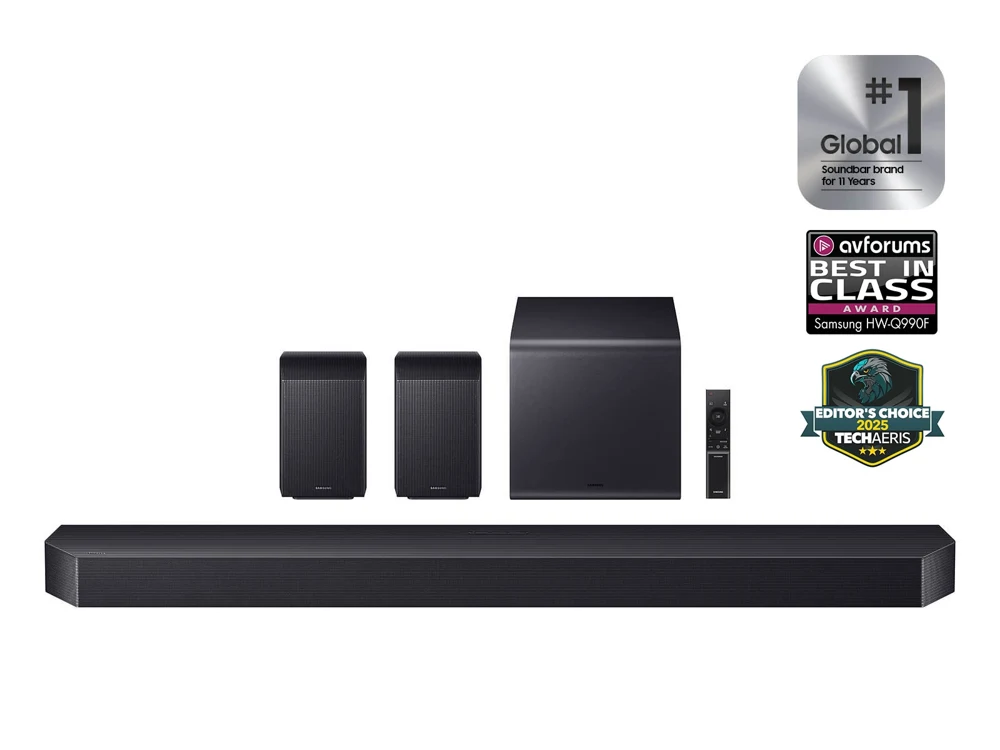
The HW-Q990F is the only product here sold as a complete package: bar, wireless subwoofer and wireless rear speakers in one box, with the highest verified channel count (11.1.4) and the only pair of HDMI 2.1 passthrough inputs, letting it sit between a console or 4K player and the TV. It also supports both Dolby Atmos and DTS:X.
Key advantages
Highest verified channel count here: true 11.1.4
Subwoofer and rear speakers included, not sold separately
DTS:X support alongside Dolby Atmos
Two HDMI 2.1 passthrough inputs plus eARC output
SpaceFit Sound Pro Plus automatic room calibration
What you give up
Streaming protocol and voice-assistant support not confirmed on official specs
Largest, heaviest package of the group (4 physical pieces)
Best integration features (Q-Symphony) require a compatible Samsung TV
Best for: Buyers who want a complete sub-and-rears system in one box with no extra purchases
On paper, Arc Ultra's 14-driver Sound Motion architecture is built to maximize what one bar alone can do, and Sonos quotes a full 9.1.4 Atmos spec once you add its own Sub and Era 300 rears. It also has the widest multi-room ecosystem of this group if you already own other Sonos speakers.
Key advantages
14 Sonos-engineered drivers with Sound Motion woofer
9.1.4 Atmos spec once expanded with Sub + Era 300
Speech Enhancement with adjustable dialogue clarity
Deep Sonos multi-room app ecosystem
AirPlay 2 and Spotify Connect built in
What you give up
No DTS:X decoding
No Chromecast/Google Cast support
Sub and rears are a separate purchase, each at added cost
Single HDMI eARC port, no passthrough input
Best for: Buyers who want the best single-bar sound and may add Sonos gear later
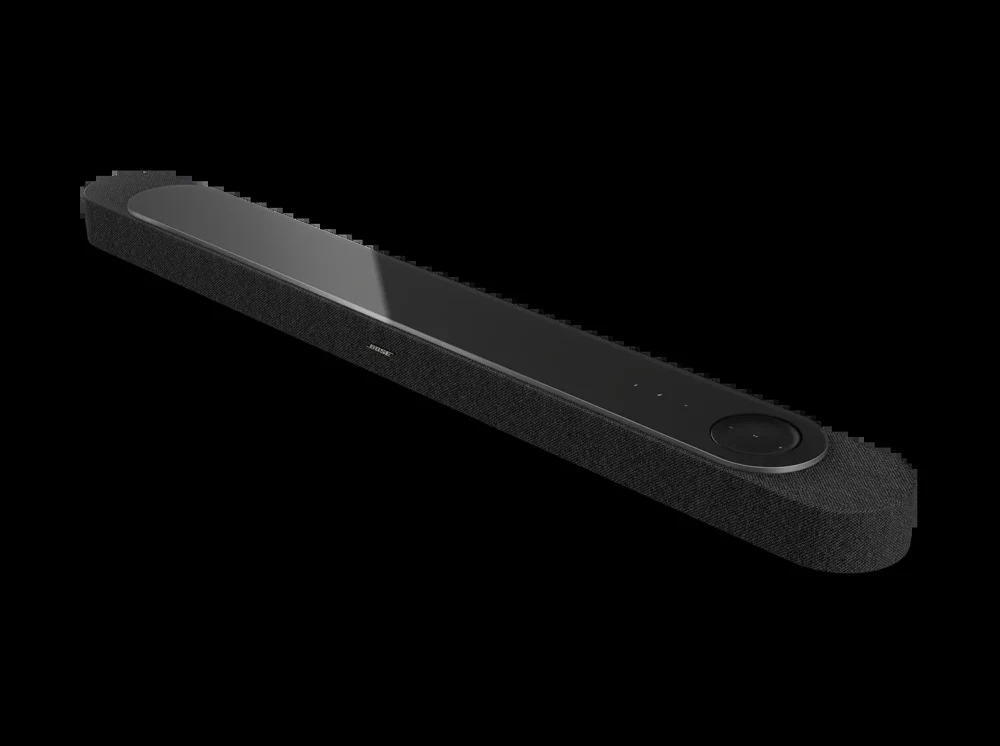
Bose's 2026 flagship replaces the Smart Ultra Soundbar and, on paper, is the only bar here that pairs AirPlay 2 with Google Cast out of the box. Its PhaseGuide drivers are built to project a wide virtual soundstage from a standalone bar, and CustomTune handles room calibration from a phone instead of a bundled headset.
Key advantages
Only bar here with both AirPlay 2 and Google Cast
Expands to true 7.1.4 with Lifestyle Ultra Speakers and Subwoofer
CustomTune phone-based room calibration
SpeechClarity adjustable dialogue enhancement
Alexa built in and Alexa+ ready
What you give up
Lowest standalone channel count of this group (5.1.2)
No DTS:X decoding
Sub and rears each sold separately, at added cost
No bundled remote; relies on CEC with the TV remote
Best for: Buyers who want Google Cast alongside AirPlay and a piece-by-piece upgrade path
Sony's flagship bar is built around a 13-speaker, 7.0.2-channel array with dual built-in passive radiators, using 360 Spatial Sound Mapping to create phantom front and side speakers without external hardware. Both Dolby Atmos and DTS:X are supported, which neither Sonos nor Bose currently offer.
Key advantages
Supports both Dolby Atmos and DTS:X
7.0.2ch from 13 speakers without external hardware
Standalone bar vs full sub-and-rears package: a fair comparison
These four products are not sold the same way, and that matters more than any single spec. The Samsung HW-Q990F is sold only as a four-piece package: soundbar, wireless subwoofer and two wireless rear speakers, all in one box, with a published 11.1.4-channel spec that reflects the full system.
The Sonos Arc Ultra, Bose Lifestyle Ultra Soundbar, and Sony BRAVIA Theater Bar 9 are each sold as a standalone bar first. Sonos and Bose both publish an expanded channel spec (9.1.4 and 7.1.4 respectively) that only applies once you buy their matching subwoofer and rear speakers separately, at added cost. Sony's bar does not require extra purchases to get Atmos and DTS:X, since its own 13 speaker units already use phantom-channel processing to approximate surround without external hardware, though adding its optional wireless sub and rears increases the number of phantom channels further.
In practice this means a straight channel-count comparison is misleading unless you note what is actually inside the box. Judge the Samsung's 11.1.4 figure as a complete package price and footprint; judge the Sonos and Bose standalone-bar figures as a ceiling you reach only after further purchases; and judge the Sony's 7.0.2ch figure as what you get from the single enclosure Sony actually ships.
Practical context
Dolby Atmos vs DTS:X: why it's not just a checkbox
All four bars decode Dolby Atmos, which is the dominant object-based surround format used by most streaming platforms, Blu-ray discs and many games. DTS:X is a competing format used on some 4K Blu-rays and by certain streaming content, and it is not interchangeable with Atmos.
Based on published specifications, the Samsung HW-Q990F and Sony BRAVIA Theater Bar 9 both decode DTS:X alongside Dolby Atmos. The Sonos Arc Ultra and Bose Lifestyle Ultra Soundbar do not support DTS:X at all, a limitation confirmed by Sonos's own community support channel and in third-party testing of the Bose unit. If your media library or disc collection relies on DTS:X, that alone narrows the field to Samsung or Sony regardless of other features.
Practical context
Room correction and calibration approaches differ
Each brand tunes its soundbar to your room differently. Sonos uses Trueplay, run from the Sonos app on iOS or Android, measuring how sound bounces around the room with the device's microphone. Bose uses CustomTune, the successor to its older ADAPTiQ headset-based system, also run from a phone. Samsung's SpaceFit Sound Pro Plus calibrates automatically using microphones built into the soundbar, with no separate app walkthrough required. Sony's Sound Field Optimization performs a similar automatic calibration pass.
None of these claims have been independently measured here; this is a comparison of what each manufacturer states its calibration feature does, not a verdict on which sounds best in a given room.
Before you buy
Buying guide
Decide if you want one box or a full system
If you don't want to manage a subwoofer and rear speakers as separate purchases and installs, the Samsung HW-Q990F is the only product here that includes everything in one purchase. If you prefer starting with just a bar and deciding later, Sonos, Bose or Sony let you begin smaller.
Check your disc and streaming library for DTS:X
If you have 4K Blu-rays or stream from services that use DTS:X, only the Samsung HW-Q990F and Sony BRAVIA Theater Bar 9 decode it natively; the Sonos Arc Ultra and Bose Lifestyle Ultra Soundbar do not.
Match your phone and smart-home ecosystem
AirPlay 2 is supported across all four. Only the Bose Lifestyle Ultra Soundbar also offers Google Cast alongside AirPlay 2 in this group, which matters if your household uses both Apple and Android/Google-connected devices.
Look at your TV brand for integration features
Samsung's Q-Symphony and Sony's BRAVIA Sync/Acoustic Center Sync both unlock extra features when paired with a same-brand TV. If you already own a Samsung or Sony TV, matching the soundbar brand can add tangible benefits beyond raw audio specs.
Check for HDMI passthrough if you have multiple source devices
The Samsung HW-Q990F is the only bar here with two HDMI 2.1 passthrough inputs, letting a game console and a 4K player both connect to the bar instead of the TV. The Sonos, Bose and Sony bars each have a single HDMI eARC port and no passthrough input.
Don't assume voice assistants are included
Sonos and Bose both build Alexa into their bars. Samsung's voice-assistant support is not clearly confirmed on its current official spec sheet, and Sony's BRAVIA Theater Bar 9 has no built-in microphone or voice assistant at all.
FAQ
Common questions
Which of these soundbars supports both Dolby Atmos and DTS:X?
Based on official specifications, only the Samsung HW-Q990F and the Sony BRAVIA Theater Bar 9 support both formats. The Sonos Arc Ultra and Bose Lifestyle Ultra Soundbar decode Dolby Atmos only, with no DTS:X support.
Do any of these soundbars include a subwoofer and rear speakers in the box?
Only the Samsung HW-Q990F ships as a complete package with a wireless subwoofer and two wireless rear speakers included. The Sonos, Bose and Sony bars are sold standalone, with matching subwoofers and rear speakers (where available) sold separately.
Can I add a subwoofer and rear speakers to the Sonos Arc Ultra or Bose Lifestyle Ultra Soundbar later?
Yes. Sonos publishes a 9.1.4-channel Atmos spec for the Arc Ultra once paired with a Sonos Sub and two Era 300 speakers. Bose publishes a true 7.1.4-channel spec for the Lifestyle Ultra Soundbar once paired with its Lifestyle Ultra Subwoofer and two Lifestyle Ultra Speakers. Both are separate purchases.
Which soundbar has HDMI passthrough for a game console or 4K player?
Only the Samsung HW-Q990F has HDMI 2.1 passthrough inputs (two of them) in addition to its eARC output. The Sonos Arc Ultra, Bose Lifestyle Ultra Soundbar and Sony BRAVIA Theater Bar 9 each have a single HDMI eARC/ARC connection with no separate passthrough input.
Do these soundbars work with any TV, or only same-brand TVs?
All four connect to any TV with an HDMI eARC or ARC port. Samsung's Q-Symphony and Sony's BRAVIA Sync/Acoustic Center Sync add extra integration features, but only when paired with a compatible same-brand TV; the bars still function as standard soundbars on any other TV.
Which of these has a built-in voice assistant?
The Sonos Arc Ultra and Bose Lifestyle Ultra Soundbar both build in Amazon Alexa. Samsung has not clearly confirmed voice-assistant support for the current HW-Q990F on its official spec sheet. The Sony BRAVIA Theater Bar 9 has no built-in microphone or voice assistant.
How we compared
This guide is based on our comparison of manufacturer specifications and published product information, not on hands-on lab testing. Recommendations reflect specifications, trade-offs and buyer fit only — commissions and other commercial factors never influence rankings. Prices change, so we don't list them; check the retailer for the current price.